A broken spark plug can turn an ordinary drive into a frustrating situation in minutes. Whether your engine suddenly starts misfiring or the spark plug snaps during replacement, the problem can leave many car owners feeling stuck—especially when there’s no mechanic nearby. The good news is that learning how to remove a broken spark plug is easier than most people think, and it’s a valuable skill every driver should know.
Instead of panicking or spending extra money on emergency repairs, you can often fix the issue yourself with a few basic tools, some patience, and the right approach. Knowing how to handle a broken spark plug not only saves time and repair costs but also helps you avoid further engine damage caused by improper removal.
In this step-by-step guide, you’ll learn exactly how to remove a broken spark plug safely and effectively, even if you have little to no mechanical experience. Follow along, and by the end, you’ll feel confident enough to tackle the job on your own.
What are the Signs of a Broken Spark Plug
Table of Contents
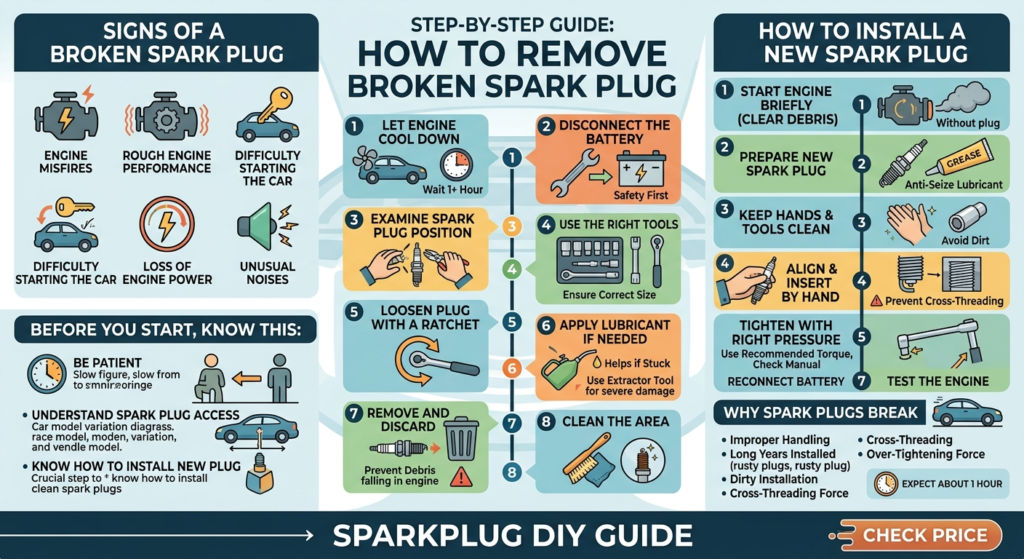
A broken spark plug can cause various issues with your car’s engine, and knowing the warning signs can save you from unexpected trouble. Here are some common symptoms that may indicate your spark plug is damaged:
Engine Misfires
If your engine is misfiring, it could be due to a broken spark plug. Although engine misfires can happen for several reasons, a faulty spark plug is one of the most common causes.
Rough Engine Performance
Does your engine feel rough or vibrate more than usual? This may be a sign that a broken spark plug is affecting the engine’s smooth performance.
Difficulty Starting the Car
If your car struggles to start, it could mean the spark plug is damaged or not functioning properly. Without a working spark plug, the engine cannot ignite the fuel-air mixture correctly.
Loss of Engine Power
A sudden decrease in engine power or slower acceleration may indicate that the spark plug is no longer firing efficiently, reducing your car’s overall performance.
Unusual Noises
Hearing strange noises, such as popping or knocking sounds, when starting or driving your car can be a clear sign of a damaged spark plug.
By paying attention to these warning signs, you can identify and fix a broken spark plug early, helping you avoid more serious engine problems later on.
How to remove a broken spark plug
Removing a broken spark plug might seem tricky, but with the right steps, it’s easier than you think. Follow this simple guide to safely and effectively remove a broken spark plug from your car engine.
Let the Engine Cool Down
Before you begin, make sure your car’s engine has cooled completely. If you’ve driven the car recently, wait at least an hour. Working on a hot engine can be dangerous and may damage engine components.
Disconnect the Battery
For safety, disconnect the car battery before starting. This helps prevent accidental electrical issues while working on the engine.
Check the Spark Plug Position
Take a close look at the broken spark plug. If part of it is sticking out, you may be able to grip it with pliers and carefully pull it out.
Use the Right Tools
If the spark plug is not easily accessible, use the proper tools to reach the spark plug socket. Make sure you have the correct-sized socket to avoid damaging the threads around the spark plug hole.
Loosen the Plug with a Ratchet
Attach the socket to a ratchet and extension. Insert it into the spark plug hole and turn the ratchet counterclockwise to loosen the plug. Continue turning until the spark plug comes free.
Apply Lubricant if Needed
If the spark plug is stuck or too tight, apply a small amount of lubricant around it to help loosen it. For severely damaged plugs, using a spark plug extractor tool can make the removal process easier.
Remove and Discard the Spark Plug
Once the spark plug is loose, gently pull it out and discard it properly. Be careful not to let any debris fall into the engine.
Clean the Area
Before installing a new spark plug, clean the area around the spark plug hole to ensure a smooth and secure installation.
By following these steps, you can safely remove a broken spark plug with minimal effort. With the right tools and a little patience, this task can be simple and stress-free.
How to install a new spark plug
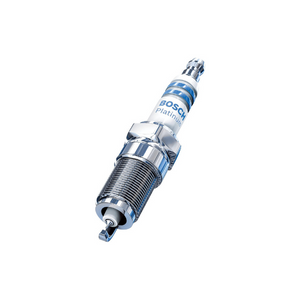
Once you’ve removed the broken spark plug, the next step is to install a new one. Installing a spark plug properly ensures your car runs smoothly and avoids further engine problems. Follow these simple steps to do it the right way.
Start the Engine Briefly
After removing the broken spark plug, start the engine for a few seconds (without the spark plug installed). This helps clear out any debris or particles that may have fallen into the exhaust valve. Turn the engine off again before proceeding.
Prepare the New Spark Plug
Before installing, inspect the new spark plug to ensure it’s clean and undamaged. If possible, apply a small amount of anti-seize lubricant to the threads to make future removal easier.
Keep Hands and Tools Clean
Make sure your hands and tools are clean to avoid getting dirt or grease on the new spark plug. Any contamination can affect the spark plug’s performance.
Align and Insert the Spark Plug
Carefully place the new spark plug into the hole, ensuring it’s aligned correctly. Thread it in by hand first to prevent cross-threading, which can damage the engine.
Tighten with the Right Pressure
Use a socket wrench to tighten the spark plug. Be careful not to over-tighten—it should be snug but not excessively tight. Most spark plugs require a specific torque setting, so check your car’s manual for the recommended pressure.
Reconnect the Battery
Once the spark plug is securely in place, reconnect the car battery to restore power.
Test the Engine
Start the engine and let it run for a few minutes to ensure the spark plug is installed correctly and the engine is running smoothly.
Regular Maintenance
To keep your car in top shape, clean and inspect the spark plugs regularly. Replacing them when needed can help maintain engine performance and prevent future issues.
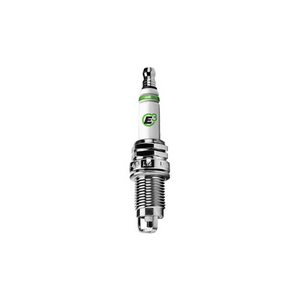
By following these steps, you’ll install the new spark plug like a pro and keep your vehicle running efficiently. Remember, using high-quality spark plugs, like those designed for a 4.0 Jeep Wrangler JK, can make a big difference in your car’s performance.
What Should You Know Before Removing Broken Spark Plugs?
Removing a broken spark plug isn’t something you can rush through. It requires the right tools, techniques, and a bit of patience. Here are the key things you need to know before getting started:
- Be Patient
Patience is the most important thing you need when dealing with a broken spark plug. Rushing through the process can lead to mistakes that might damage your engine further. Take your time and follow each step carefully. - Understand How to Access the Spark Plugs
You need to know where the spark plugs are located and how to reach them. Depending on your car model, accessing them can be straightforward or a little tricky. Don’t worry—this guide will make it easier for you. - Know How to Install a New Spark Plug
Before removing the broken spark plug, ensure you know how to install a new one. Without a properly installed replacement, your car won’t run. Learning this step ahead of time will save you frustration later.
By keeping these points in mind, you’ll be better prepared to remove a broken spark plug and replace it successfully, keeping your car in great shape!
What is the reason for breaking off a spark plug?
- There are much reasons for breaking off a spark plug one of the reasons for breaking off a spark plug is improper handling of it and various other reason also
- If you have installed it long years ago then it can be the reason for being damaged.
- If you or the other person has done the task of installation with dirty hands then it may damage.
- Maybe cross-threading happened during the time of installation.
- Using more force while installing the spark plug can be the another reason.
So all the reason tells us what are the reason for breaking off a spark plug. That’s why before installing the spark plug you must read our guide or watch a youtube tutorial video because most of the time spark plug breaks due to improper installation.
How long does it take to change spark plugs

You must setup your mind that the task of removing broken spark plu will take time because you cannot do the task in a hurry. But in general it will take a hour to remove the broken spark plug from your car engine.
Conclusion
If you are still reading this article then I think you must have understood the whole process of how to remove broken spark plug and how to install new spark plug.
If you still have any question regarding this article then you can feel free to ask me about it through below comment section.