Is your 7.3 Powerstroke losing power, idling rough, or consuming more fuel than usual? Have you ever wondered whether a faulty fuel injector could be the cause? Since the 7.3 Powerstroke relies on eight injectors to deliver the right amount of fuel to each cylinder, even one malfunctioning injector can affect engine performance, fuel efficiency, and reliability.
So, how to test 7.3 Powerstroke injectors and determine whether they’re working properly? The good news is that you don’t always need to replace parts blindly or spend a fortune on diagnostics.
With the right testing methods, you can identify injector problems early, prevent costly repairs, and keep your diesel engine running at its best.
In this guide, we’ll walk you through the steps to test your 7.3 Powerstroke injectors and spot potential issues before they become major headaches.
Read our similar article – Best 7.3 injectors
How to test 7.3 Powerstroke injectors
Table of Contents
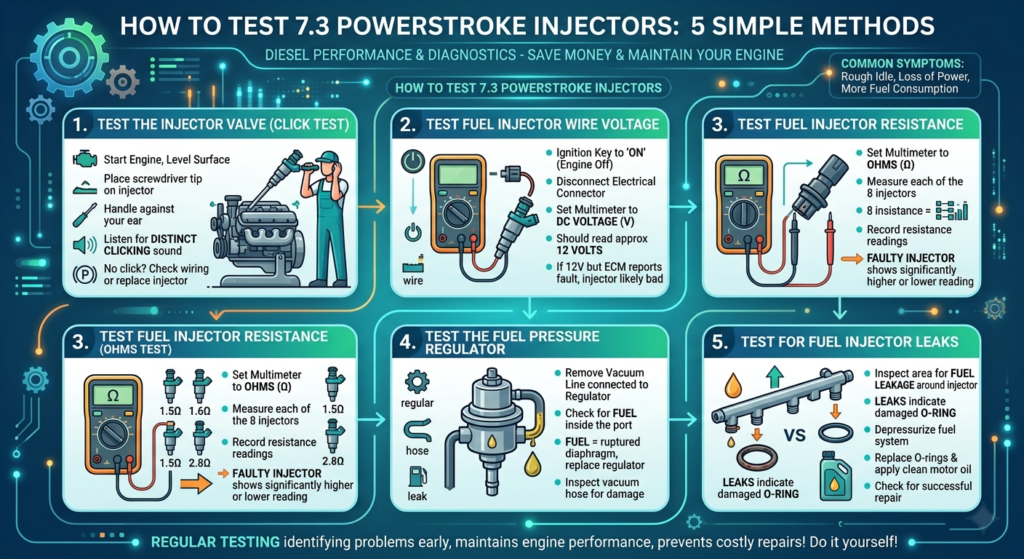
Today, we’ll walk you through five simple methods to test your 7.3 Powerstroke injectors. Whether you’re checking the injector valve, measuring voltage, or inspecting for leaks, these tests can help you identify potential problems and keep your fuel system performing at its best.
1. Test the Injector Valve
Start by parking your vehicle on a level surface and engaging the parking brake. Once the engine is running, take a long-handled screwdriver and place its tip on top of the fuel injector. Press the handle against your ear and listen carefully.
A properly functioning injector should produce a distinct clicking sound. This noise indicates that the injector solenoid is activating and the injector is firing correctly.
If you don’t hear a clicking sound, inspect the injector wiring for damage or loose connections. If the wiring appears to be in good condition, the injector itself may be faulty and require replacement.
This quick test is an easy way to detect injector issues before they develop into more serious and costly problems.
2. Test Fuel Injector Wire Voltage
To check the injector’s voltage supply, turn the ignition key to the “ON” position without starting the engine. Then, disconnect the electrical connector from the fuel injector.
Set your multimeter to the DC voltage (V) setting. Insert the multimeter probes into the terminals of the injector connector. Polarity is not important for this test.
A healthy circuit should show approximately 12 volts on the multimeter. If the reading is close to 12 volts but the engine control module (ECM) is still reporting an injector fault, the injector itself is likely defective and may need replacement.
However, if you do not see a 12-volt reading, the problem is likely within the wiring, connector, fuse, or related electrical circuit. In this case, inspect and repair the electrical system before replacing the injector.
How to test the fuel injector resistance
To test fuel injector resistance, set your multimeter to the Ohms (Ω) setting. Then, place the red and black multimeter leads on each side of the fuel injector plug terminals. Make a note of the resistance reading displayed on the meter.
Next, repeat the same process for the remaining seven injectors and record their readings. Once you have all the readings, compare the results.
In most cases, the resistance readings should be very similar across all fuel injectors. A faulty injector will usually have a reading that is significantly different from the others. You may notice that the failed injector displays either much higher or much lower resistance than the normal injectors.
If an injector shows a substantial difference in resistance compared to the rest, it should be replaced as soon as possible.
How to Test the Fuel Pressure Regulator
To test the fuel pressure regulator, start by removing the vacuum line connected to the regulator. Carefully inspect the regulator, especially the vacuum port where the hose was attached.
If you find any fuel inside the vacuum port, the regulator’s diaphragm has likely ruptured and the fuel pressure regulator should be replaced immediately.
If there is no fuel present, the regulator is likely functioning properly. However, you should also inspect the vacuum hose for cracks, leaks, or other signs of damage and replace it if necessary.
How to Test for Fuel Injector Leaks
Start by inspecting the area where the fuel injector connects to the fuel rail. If you notice any fuel leaking around the injector, it may indicate that the injector O-ring is damaged, worn out, or improperly seated. A faulty O-ring can allow fuel to escape under pressure, leading to leaks and reduced engine performance.
To fix the issue, first depressurize the fuel system. Next, remove any components that obstruct access to the fuel rail, such as the air intake assembly, vacuum hoses, or electrical connectors. Once you have clear access, carefully lift the fuel rail away from the injectors.
Remove the faulty injector by gently pulling it out of its bore. Replace the old O-rings with new ones and apply a small amount of clean motor oil to the new O-rings to ensure proper installation and prevent damage during reassembly.
Finally, reinstall the injector, refit the fuel rail, and reassemble any components that were removed. Once everything is back in place, check for leaks to confirm the repair was successful.

Conclusion
Now that you’ve learned the five different methods for testing 7.3 Powerstroke injectors, you should be able to diagnose injector-related issues with confidence. By following these procedures, you can check the condition of your injectors without relying on a mechanic for basic testing.
Regular injector testing can help you identify problems early, maintain engine performance, and avoid costly repairs down the road. With the right tools and a little patience, testing your 7.3 Powerstroke injectors is a task you can handle yourself.
How do you tell if your 7.3 needs injectors?
If you find starting related problem, misfire, smell of fuel, dirty smoke or if you get poor mileage then you should understood that you need new 7.3 injectors.
What fails on a 7.3 injector?
The most common failure we see is when oil residue builds up inside the of the injector and causes the spool valve to move slowly or stick which is known as stiction.