Have you ever returned to your parked car only to discover an ugly paint scuff on the door or bumper? Wondering how to remove paint scuff from car surfaces without spending a fortune at a body shop? You’re not alone.
Paint scuffs are one of the most common cosmetic issues car owners face. Whether caused by a minor parking lot mishap, brushing against another vehicle, or accidental contact with walls and poles, these marks can quickly ruin your car’s flawless appearance. The good news is that many paint scuffs can be removed using simple techniques and readily available products.
Along with paint scuffs, your vehicle’s finish can also suffer from water spots, bird droppings, bonded contaminants, etching, and light scratches as it ages. Understanding the right methods to tackle these imperfections can help keep your car looking clean, glossy, and well-maintained for years to come.
In this guide, we’ll show you how to remove paint scuff from car surfaces safely and effectively, helping you restore that showroom shine without unnecessary expense.
How to Remove Paint Scuffs with Ease
Table of Contents
No need to panic—our team at Cartoolsguide.com is here with expert advice to help you remove those pesky paint scuffs and restore your car’s shine. Most paint scuffs only affect the clear coat, making them relatively easy to remove. However, the depth of the scuff will determine the repair method required.
We’ve broken the process down into simple, easy-to-follow steps, covering everything from quick fixes for surface-level scuffs to more advanced techniques for stubborn marks. Follow this guide to restore your vehicle’s appearance and keep it looking as good as new.
Why Trust Cartoolsguide?
Cartoolsguide provides expert insights into car maintenance and detailing, including specialized advice for dealing with various types of paint scuffs and scratches. Our goal is to provide practical, effective solutions that are easy for anyone to follow—without requiring expensive tools or professional assistance.
Visit Cartoolsguide.com to learn more about maintaining your vehicle’s finish and discover the best methods for removing paint scuffs effectively.
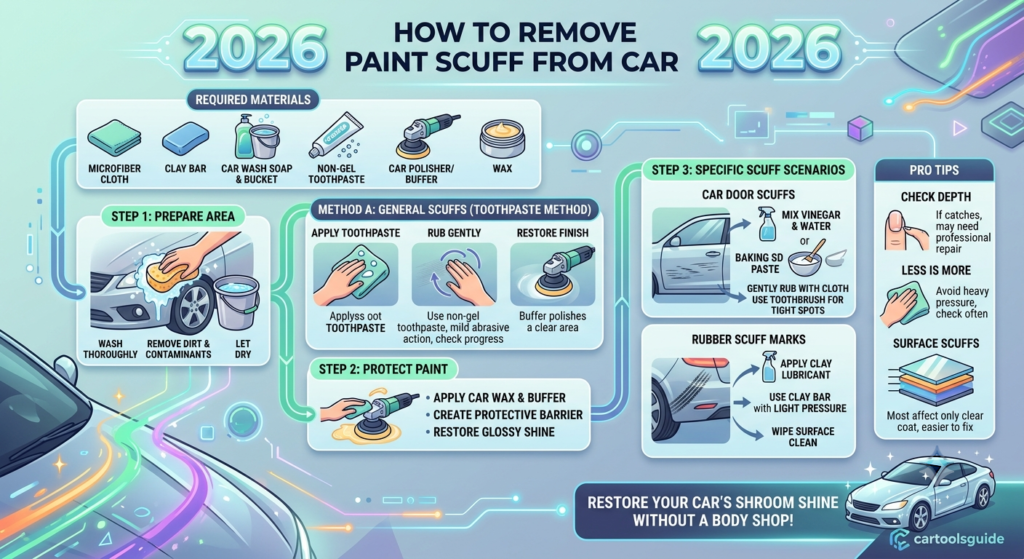
How to remove paint scuff from car 2026
Required Materials
Before you begin, gather the following materials:
- A clean, lint-free cloth
- Clay bar
- Car cleaning products
- Toothpaste (non-gel, mildly abrasive)
- Buffer
- Polisher
Step 1: Identify and Prepare the Scuffed Area
Begin by carefully inspecting your vehicle’s surface to locate any paint scuffs. These marks often appear as light streaks or scratches caused by contact with another vehicle, wall, pole, or object.
Once you’ve identified the affected area, wash it thoroughly using a gentle car shampoo and clean water. This removes dirt, dust, and contaminants that could cause additional scratches during the repair process.
After cleaning, allow the area to dry completely before proceeding to the next step.
Step 2: Remove Scuffs from the Paint
Once the surface is dry, apply a small amount of toothpaste to a clean cloth. Toothpaste contains mild abrasive compounds that can help remove light paint scuffs and surface imperfections.
Using gentle circular motions, rub the toothpaste over the scuffed area. Continue polishing until the mark begins to fade. Be careful not to apply excessive pressure, as this may damage the paint.
If the scuff remains visible, use a clay bar to remove any embedded contaminants. For deeper or more stubborn marks, a car polisher may provide better results and help restore a smooth finish.
Why Use Toothpaste?
Toothpaste contains fine abrasive particles that act similarly to a very mild polishing compound. These particles can help remove superficial scuffs without causing significant damage to your vehicle’s paint. This simple trick is commonly used to polish minor imperfections on various surfaces.
Step 3: Apply a Protective Wax Layer
After successfully removing the scuff marks, apply a quality car wax to protect the paint and enhance its shine.
Using a buffer, spread the wax evenly across the repaired area with gentle circular motions. The wax creates a protective barrier over the clear coat, helping prevent future scuffs and environmental damage while restoring a glossy, showroom-quality finish.
By following these simple steps, you can effectively remove paint scuffs and restore your car’s original shine, keeping it looking clean, polished, and well-maintained for years to come.
HOW TO REMOVE SCUFF MARKS FROM CAR DOOR 2026
our car’s door panels are often among the first areas to show signs of wear and tear, with scuff marks appearing from frequent use. Fortunately, with the right approach and tools, you can restore these surfaces to their original appearance.
At Cartoolsguide, we provide expert advice on safe and effective products that can help rejuvenate your car’s door panels and remove stubborn scuff marks. Here’s how:
Step 1: Identify and Clean the Scuffed Area
Begin by locating the scuff marks on your car’s door panel. Once identified, clean the area thoroughly using soapy water to remove any dirt, dust, or grime.
Next, assess the depth of the scuff by gently running your fingernail across it. This simple test will help determine whether the mark is superficial or if a more intensive treatment may be required.
Step 2: Apply a Cleaning Solution
For an easy DIY solution, mix equal parts water and white vinegar in a spray bottle. Shake well and spray the mixture directly onto the scuffed area. Vinegar’s natural cleaning properties can help loosen dirt and remove light scuff marks.
If the vinegar solution doesn’t provide the desired results, use a diluted degreaser. Mix one part degreaser with four parts water, then spray the solution onto the affected area or apply it with a clean microfiber sponge.
For more stubborn scuffs, a baking soda paste can be an effective alternative.
Step 3: Gently Rub the Area
Using a microfiber cloth or sponge, gently rub the affected area in circular motions to lift dirt and scuff marks from the surface.
For tight corners and hard-to-reach areas, an old toothbrush can provide more precise cleaning and better results.
Step 4: Let it Sit, Then Wipe Away
Allow the cleaning solution to sit on the surface for 1–2 minutes to help loosen any remaining residue.
Finally, wipe the area clean with a microfiber towel. This will remove any leftover solution and reveal a cleaner, refreshed, and scuff-free surface.
HOW TO REMOVE RUBBER SCUFF MARKS FROM CAR 2026
Rubber marks on your car’s clear coat can be frustrating, but the good news is that they’re usually easy to remove without causing any damage. Since rubber is a relatively soft material, it typically doesn’t scratch or deeply scuff your vehicle’s paint. A clay bar is one of the most effective tools for removing rubber marks because it lifts contaminants safely without harming the finish.
Follow these simple steps to remove rubber scuffs from your car.
Step 1: Prepare and Spray a Cleaning Solution
Start by preparing a mild cleaning solution using water and a gentle car shampoo or detergent. Pour the mixture into a spray bottle and shake it well.
Spray the affected area generously and allow the solution to sit for about one minute. This helps loosen the rubber residue and prepares the surface for the claying process.
Step 2: Gently Rub with a Clay Bar
After the solution has had time to work, apply a clay lubricant to the area. The lubricant reduces friction and allows the clay bar to glide smoothly across the paint surface.
Using gentle pressure, rub the clay bar over the rubber scuff in circular motions. Continue until the rubber mark is completely removed. Take your time and avoid applying excessive force to protect the paint finish.
Step 3: Wipe the Surface Clean
Once the rubber mark has been removed, wipe the area thoroughly with a clean microfiber cloth. This will remove any remaining residue and reveal a smooth, clean, and polished surface.
For larger or more stubborn rubber marks, simply repeat the process until the scuffs are completely gone. Following these steps will help maintain your car’s flawless finish and keep it looking its best.
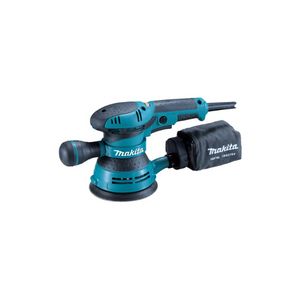
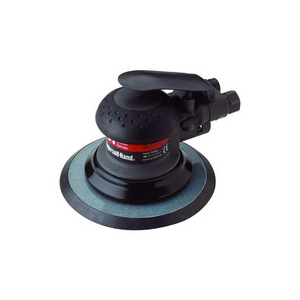
Best Sander for car paint removal 2026
Before applying a fresh coat of paint to your vehicle, one of the most important steps is properly removing the existing paint. A high-quality sander designed for automotive paint removal can make this process significantly easier and more effective.
Without thoroughly removing the old paint, achieving a smooth, professional-looking finish can be difficult. A quality sander helps create an even surface, ensuring the new paint adheres properly and delivers the best possible results.
Using the right sander not only speeds up paint removal but also helps eliminate imperfections, rust spots, and blemishes that may affect the final appearance of your vehicle. Once the old paint has been removed, you can apply primer and a fresh coat of paint with confidence, giving your car a renewed and polished look.
Conclusion: Keeping Your Car’s Paint Pristine
Removing paint scuffs and old paint doesn’t have to be complicated when you have the right tools and techniques. Most modern vehicles feature a multi-layer paint system with a protective clear coat, meaning many scuffs are only surface-level and can be removed without extensive repairs.
However, deeper scratches and paint damage caused by impacts or accidents may require professional attention.
For minor to moderate scuffs, the proper tools and a step-by-step approach can help you achieve excellent results at home while saving money on professional repairs. By following the methods outlined in this guide and using quality products, you can restore your car’s finish and keep it looking clean, glossy, and well-maintained.
We hope this guide has provided the information you need to care for your vehicle’s paintwork effectively. Thank you for trusting us with your car care needs!